
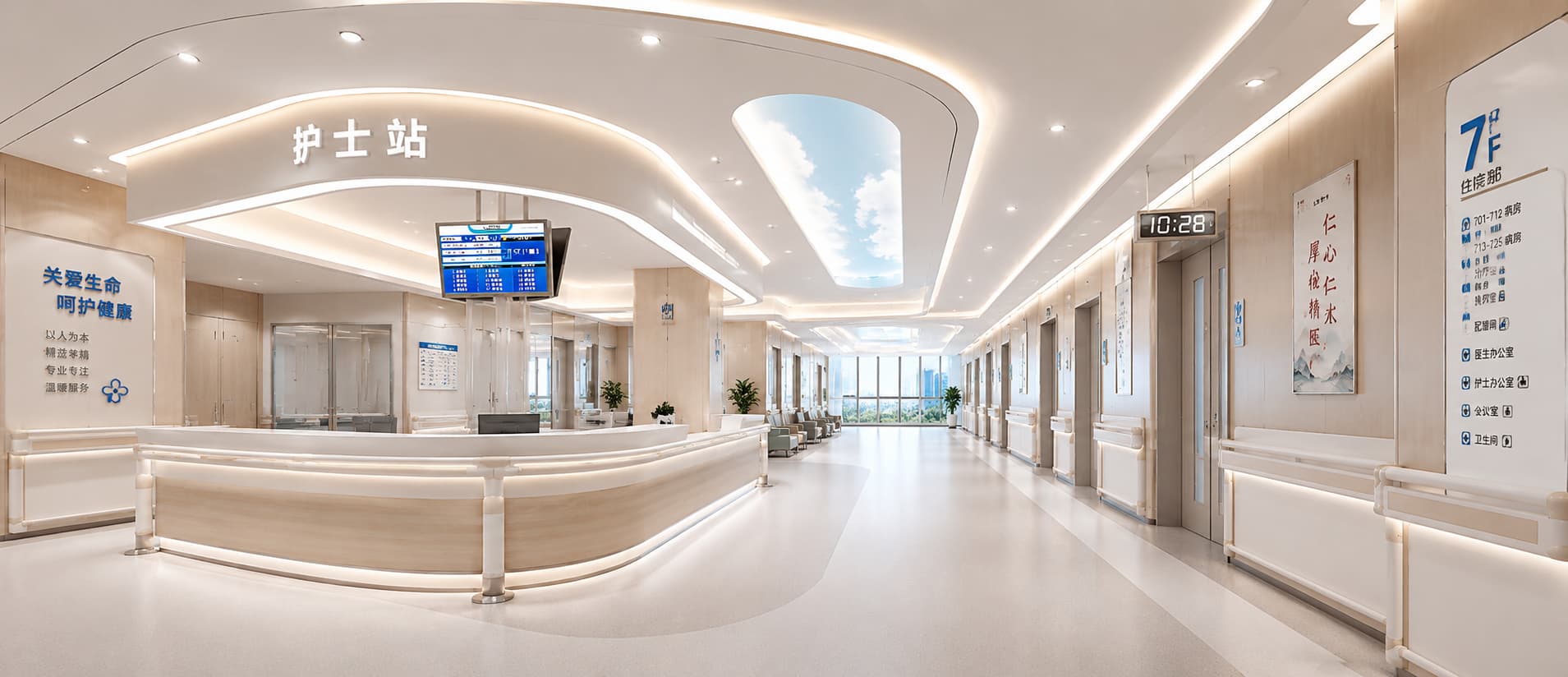
How to Choose the Right Size of Wall Corner Guard
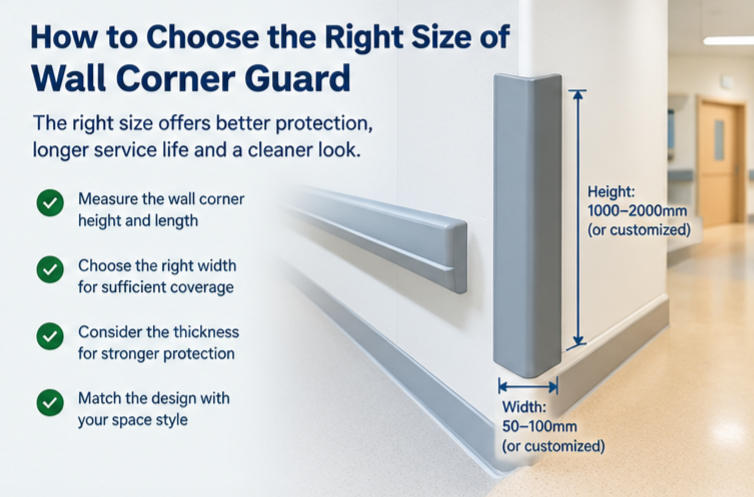
How to Choose the Right Size of Wall Corner Guard
Wall corners are vulnerable to impact from wheelchairs, carts, stretchers, beds, trolleys and daily traffic. Choosing the right size of wall corner guard helps protect vulnerable corners while maintaining a clean appearance.
For hospitals, nursing homes, schools, hotels, commercial buildings and industrial facilities, the correct height, width and thickness should be selected according to the actual risk level and wall structure.
1. Measure the Corner First
Before choosing a wall corner guard, measure the corner and surrounding wall area.
Check:
-
Corner height
-
Corner angle
-
Wall thickness
-
Available installation space
-
Impact area
-
Nearby doors and equipment
Accurate measurements help ensure proper coverage.
2. Choose the Right Guard Height
Corner guards are available in different heights.
A short corner guard may be suitable for low-risk areas, while a taller guard can protect a larger impact zone.
For hospitals and healthcare facilities, protection may be required from near floor level to higher areas where carts, wheelchairs and equipment frequently move.
Customized lengths can also be considered for large projects.
3. Consider the Guard Width
The width determines how much of each wall surface is protected.
A wider corner guard can cover more of the vulnerable area, while a narrower model may be sufficient for locations with limited impact risk.
The correct width should be matched to the corner geometry and expected impact.
4. Check Thickness
Thickness affects the protection level and appearance.
For high-traffic environments, buyers should compare:
-
Material
-
Thickness
-
Impact resistance
-
Surface durability
-
Installation method
-
Cleaning requirements
The appropriate specification depends on the project environment.
5. Consider the Corner Angle
Not every wall corner is identical.
Before ordering, check whether the corner is:
-
90-degree
-
Rounded
-
Irregular
-
Custom architectural design
A corner guard should fit securely against the wall surfaces without creating unnecessary gaps.
6. Think About the Application
Different buildings may require different protection levels.
Hospitals
Consider wheelchairs, beds, medical carts and stretchers.
Nursing Homes
Consider mobility aids, wheelchairs and daily pedestrian traffic.
Schools
Consider student traffic, carts and general impact.
Hotels
Consider luggage carts, housekeeping equipment and guest traffic.
Commercial Buildings
Consider trolleys, equipment and maintenance traffic.
7. Match the Color and Finish
A corner guard does not only provide protection. It can also contribute to the overall interior appearance.
For commercial projects, buyers can consider colors and finishes that match:
-
Wall panels
-
Handrails
-
Doors
-
Flooring
-
Interior design
Consistent colors can create a more professional wall protection system.
Wall Corner Guard Size Checklist
Before ordering, confirm:
-
Corner height
-
Corner width
-
Corner angle
-
Guard height
-
Guard width
-
Material
-
Thickness
-
Installation method
-
Impact level
-
Color and finish
Choose a Wall Protection Manufacturer
There is no universal wall corner guard size for every building.
The appropriate specification depends on the corner dimensions, impact risk, wall structure and project requirements.
For contractors, distributors and engineering companies, purchasing wall corner guards directly from a manufacturer can provide more options for customized dimensions, colors, materials and packaging.
Need wall corner protection for a hospital, nursing home, school or commercial project? Send your corner dimensions and application requirements to your supplier for a suitable specification.





 IPv6 network supported